
 100% Canadian Made
How to Replace Kitchen Cabinets on a Budget: 10 Money-Saving Tips for Affordable Kitchen Cabinet Replacement
Replacing kitchen cabinets can feel expensive, but a well-planned approach delivers big visual and functional upgrades without breaking the bank. This article teaches homeowners how to replace kitchen cabinets on a budget by explaining the main renovation options, listing ten practical money-saving tips, and showing how smart design and local manufacturing choices reduce total cost and headaches. You will learn how to choose between replacement, reface, and simple refreshes; which materials and layouts save the most; and when DIY saves money versus when professional help is a safer investment. Along the way we compare stock, semi-custom and thermofoil options, show simple layout and hardware changes that stretch your budget, and explain how Canadian-made cabinets and free design services from local suppliers can lower hidden costs. Read on for clear decision criteria, quick cost comparisons, actionable tips, and planning checklists to make an affordable cabinet replacement realistic and efficient.
What Are Your Options for Budget Kitchen Cabinet Renovation?
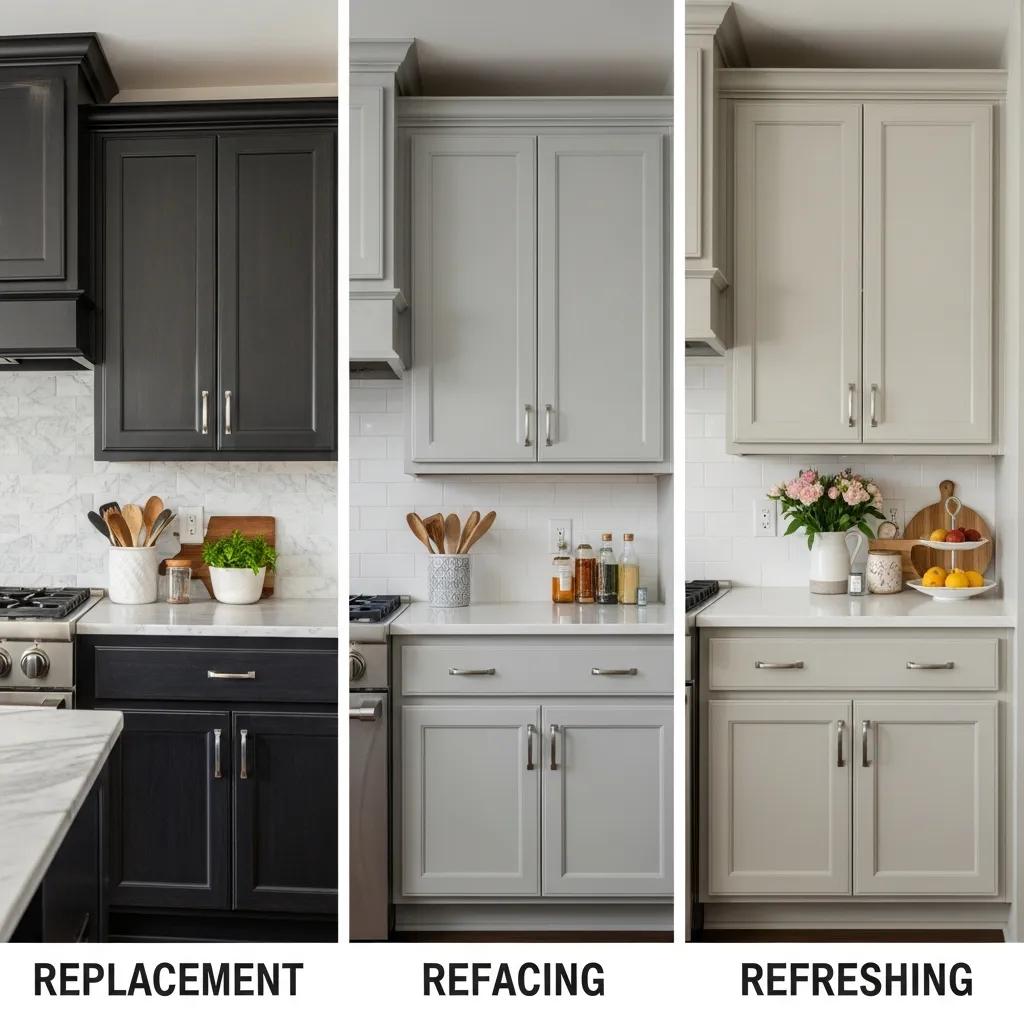
Budget-conscious cabinet renovation falls into three practical approaches: replace, reface, or refresh. Replace means building new cabinet boxes and doors to change layout or maximize durability; reface swaps doors and drawer fronts while keeping existing boxes to cut material and labour; refresh focuses on paint, hardware, and minor repairs to get a new look for the least money. Each option works for different conditions: replace when boxes are damaged or layout changes are needed, reface when boxes are sound but aesthetics are dated, and refresh when structural integrity is fine and cosmetic change suffices. Understanding these distinctions helps you choose the fastest route to your goals and avoid overspending on unnecessary work.
The following table summarizes cost ranges and best uses for each approach so you can compare them quickly and choose an appropriate path.
| Option | Typical Cost Range (Canada) | Best For |
|---|---|---|
| Replace (full cabinets) | $6,000–$20,000+ | Damaged boxes, layout changes, long-term value |
| Reface (doors & veneer) | $2,000–$8,000 | Good boxes, cosmetic update, faster turnaround |
| Refresh (paint/hardware) | $200–$2,000 | Cosmetic refresh, lowest cost, short-term solution |
This comparison clarifies when replacement is justified versus lower-cost alternatives and sets expectations for durability, timeline, and ROI.
Should You Replace, Reface, or Refresh Your Kitchen Cabinets?
Deciding whether to replace, reface, or refresh centers on condition, budget, and goals. Start with a quick diagnostic checklist: assess cabinet box integrity, desired layout changes, budget ceiling, expected lifespan, and resale plans; these criteria determine the right approach. If boxes show water damage, sagging, or structural failure, replacement is usually the most cost-effective long-term choice because it removes recurring repair risk and enables layout improvements. When boxes are solid and you want a fresh look without a major disruption, refacing delivers a modern finish while keeping waste and labour lower; a refresh with paint and hardware is ideal for very tight budgets and short-term visual improvement.
Use this checklist to guide your decision-making:
- Are cabinet boxes structurally sound and level?
- Do you need layout or function changes?
- What is your realistic budget for cabinets and installation?
- How long do you expect to keep the renovated kitchen?
Working through these questions leads naturally to the costs and benefits of refacing compared to full replacement, which is the next key comparison to understand.
How Does Cabinet Refacing Compare to Full Replacement in Cost and Benefits?
Cabinet refacing reduces expense primarily by keeping the existing cabinet boxes and replacing doors, drawer fronts, and visible surfaces; this lowers material and labour costs substantially. Typical industry estimates show refacing often saves roughly 30–50% compared with full replacement while delivering a modernized appearance and faster turnaround. The trade-offs are clear: refacing cannot change cabinet footprint or fix degraded boxes, and it may offer shorter useful life than a full box replacement depending on original construction. Refacing is viable when boxes are square, securely anchored, and you want to update finishes without structural work.
If you need layout changes, better storage ergonomics, or maximum longevity, full replacement is the better investment even though upfront cost is higher, because replacement lets you choose improved materials and drawer configurations that reduce lifetime maintenance and increase resale value.
What Are the Top 10 Money-Saving Tips for Affordable Kitchen Cabinet Replacement?
This section lists ten practical, prioritized ways to replace kitchen cabinets on a budget and explains when each tip will save the most money. Use the tips as a checklist while planning so that small choices compound into significant savings.
- Plan before you buy and measure twice to avoid costly reorders.
- Consider refacing or refreshing as lower-cost alternatives to full replacement.
- Choose stock or semi-custom sizes to reduce manufacturing and installation costs.
- Select affordable materials such as thermofoil or laminate for visible surfaces.
- Use open shelving strategically to eliminate some upper cabinets.
- Favor simple door styles and standard finishes to lower door costs.
- Reduce the number of drawers and increase door-front storage where possible.
- Update hardware and hinges instead of replacing doors for a quick refresh.
- Do painting or installation yourself only when you have the right skills.
- Partner with a local supplier for factory-direct pricing and free design help.
The numbered list above provides a quick roadmap; the following subsections explain each tip in actionable detail so you can apply them to your project.
How Can Cabinet Refacing Provide a Fresh Look While Saving Money?
Cabinet refacing replaces doors, drawer fronts, and visible surfaces while keeping the existing cabinet boxes, which cuts both material and labour costs. The process typically involves removing old doors, repairing or veneering visible faces, installing new doors and hardware, and refinishing as needed — work that often completes in days rather than weeks. Refacing is cost-effective when boxes are in good shape, because it preserves the cabinet skeleton and avoids demolition and new box construction; typical savings versus full replacement are commonly in the 30–50% range. The main limitation is design flexibility: if you need different cabinet depths, pull-out systems, or layout changes, refacing cannot achieve those goals.
Refacing reduces landfill waste and speeds installation, and it often pairs well with targeted upgrades like new countertops or backsplashes to maximize perceived value without the full replacement cost.
What Are the Benefits and Costs of DIY Kitchen Cabinet Painting?
DIY cabinet painting can offer significant savings because labor is the largest cost in most cabinet refresh projects.
A typical DIY cabinet paint kit includes primer, topcoat paint, brushes or rollers, and sometimes new hardware or sanding supplies.
DIY material costs usually range from about $100 to $600, depending on the size of the kitchen and the quality of products you choose.
Professional cabinet painting often ranges from several hundred dollars to a few thousand dollars, largely due to labor, specialized equipment, and higher-end finishes.
Proper surface prep is critical for durability; cabinets must be thoroughly cleaned, sanded, and primed to ensure good adhesion and a long-lasting finish.
Skipping or rushing prep steps increases the risk of peeling, chipping, or premature wear, which may require costly repainting or even replacement later.
DIY painting makes the most sense if you have the time, patience, and skill to follow each step carefully and are comfortable accepting minor imperfections.
Hiring a professional is often worth it when your cabinets have detailed profiles, need repairs, or when you want a smooth, factory-quality sprayed finish.
A high-quality professional job can extend the life of your cabinets and delay the need for another major update, improving long-term value.
When choosing between DIY and pro painting, weigh your budget, skill level, and tolerance for mistakes against the durability and appearance you expect over the next several years.
How to Choose Between Stock and Semi-Custom Cabinets for Budget Savings?
Stock cabinets are pre-manufactured in standard sizes and typically offer the lowest cost and fastest lead time, while semi-custom cabinets provide size flexibility and finish options at a moderate premium. Choosing stock cabinetry reduces both material costs and waste when your kitchen follows standard measurements, and it simplifies installation because components are readily available. Semi-custom becomes cost-effective when you need only a few size adjustments or one-off pieces that prevent creating awkward filler strips or costly custom runs. The decision hinges on measurement accuracy, desired finishes, and how many non-standard runs are required; sometimes spending a bit more on semi-custom reduces installation time and material waste, lowering total project cost.
Consider measuring carefully and planning to use standard cabinet modules wherever possible to maximize the savings of stock options without sacrificing fit.
Why Opt for Affordable Materials Like Thermofoil and Laminate?
Thermofoil and laminate surfaces offer an economical balance of appearance, durability, and easy maintenance that suits many budget projects. Thermofoil doors provide a smooth, wrap-style finish that resists moisture and stains at a lower price than painted or solid-wood doors, while laminate surfaces deliver a wide range of textures and colours with excellent abrasion resistance. Compared with plywood or solid-wood construction, these materials reduce upfront cost and still perform well in typical kitchen environments, though longevity may be lower under heavy abuse. Maintenance is straightforward—wipe-clean surfaces and avoid abrasive cleaners—and replacement of door fronts later is relatively low-cost if you want to upgrade.
The following table compares common materials for budget projects by pros, cons, and durability expectations so you can choose the right surface for price and lifespan.
| Material | Pros | Typical Price Range / Durability |
|---|---|---|
| Thermofoil | Moisture-resistant, smooth finish | Low–Moderate cost / Moderate durability |
| Laminate | Wide finishes, scratch resistant | Low–Moderate cost / Moderate durability |
| MDF painted | Smooth painted look, consistent surface | Moderate cost / Moderate durability |
| Plywood box | Strong structural box option | Higher cost / High durability |
This comparison shows that thermofoil and laminate are often the best value for visual impact and low upfront cost, while plywood boxes are worth the extra if you prioritize long-term durability.
How Does Incorporating Open Shelving Reduce Kitchen Cabinet Costs?
Open shelving saves money by replacing upper cabinet boxes with mounted shelves that use less material and take less labour to install. Open shelving reduces total cabinet surface area, lowers door and hinge counts, and shortens installation time, which collectively trims material and labour portions of your budget. Design considerations include balance—use open shelving near frequently used areas, keep heavier items on lower closed storage, and select sturdy shelf materials and proper anchoring to avoid sagging. Cleaning and styling are ongoing trade-offs: open shelves require neat organization and regular dusting, but they can make a smaller kitchen feel more open and reduce costs at the same time.
Using open shelving strategically near a few upper runs creates visible savings and pairs well with lower closed storage for maximum functionality and minimal expense.
What Simple Door Styles and Finishes Save Money on Cabinets?
Choosing simple door profiles such as slab or basic Shaker styles lowers door manufacturing complexity and therefore price, because simple cuts and fewer mouldings reduce labour and material waste. Slab doors are the most economical, offering a modern look with minimal tooling, while shaker doors strike a balance between style and affordability when kept in standard dimensions and factory finishes. Finishes like thermofoil and laminate cost less than custom paint or stained hardwood, and they reduce the need for onsite finishing labour. When you select a simple style and an economical finish you maintain aesthetic quality while avoiding the premium that detailed profiles and custom stains command.
A straightforward door and finish strategy often pairs with updated hardware to create a high-value look for a modest additional cost.
Why Minimize Drawers and Maximize Doors to Lower Cabinet Expenses?
Drawers involve more components—drawer boxes, runners, and hardware—so they typically raise manufacturing and installation costs compared with standard doors and adjustable shelving. Replacing some drawer banks with pull-out shelves or adjustable shelving behind doors reduces expense while preserving access and organization, because door fronts are cheaper to produce and install. Practical trade-offs include ease of access: drawers are superior for heavy utensils and pots, so reserve drawers for those uses and convert lesser-used banks to doors to save money. Efficient storage design blends a few drawers in high-use zones with more economical door-front storage elsewhere to optimize cost without greatly sacrificing function.
This storage reconfiguration lowers cabinet expense and can improve long-term serviceability by simplifying hardware and reducing moving parts that can fail.
How Can Updating Hardware Refresh Cabinets Affordably?
Swapping cabinet hardware—knobs, pulls, and hinges—is one of the fastest, lowest-cost ways to transform kitchen aesthetics while preserving existing cabinet boxes and doors. Hardware changes affect visual perception significantly; modern, uniform pulls on existing doors often make cabinets read as new, and replacement hardware costs are modest per unit. Choose quality hinges and soft-close mechanisms selectively to improve perceived value where it matters most, and install hardware yourself to save on labour if you’re comfortable with simple drilling and alignment tasks. When combined with a fresh finish or refaced doors, new hardware completes the update for a fraction of full-cabinet replacement cost.
Consider a hardware budget and consistent finish choice to ensure visual cohesion while keeping the project affordable.
When Is DIY Installation a Smart Choice for Budget Kitchen Cabinets?
DIY installation saves on labour costs and can be sensible for confident homeowners with the right tools, clear plans, and a willingness to follow precise measurements. Typical DIY-friendly tasks include installing stock cabinets in a simple layout, painting door fronts, and mounting open shelving; more complex tasks like electrical, plumbing relocation, or structural wall changes should be left to professionals. Tools and skills required include levels, drills, shims, cabinet clamps, and patience to ensure accurate alignment; mistakes can be costly, so factor in potential rework when estimating true DIY savings. Choose DIY for straightforward installs where you can dedicate time, and hire pros for complex or safety-sensitive work to avoid higher hidden costs later.
A balanced approach mixes DIY labour where it reduces cost without sacrificing quality, and professional installation where skill prevents expensive mistakes.
How Does Partnering with a Local Supplier Like Affordable Kitchens Save Money?
Working with a local, factory-direct supplier reduces lead time, shipping, and markup, and provides support that prevents costly mistakes during measurement and installation. Affordable Kitchens manufactures 100 percent Canadian-made kitchen and bathroom cabinets with features such as white raised-panel doors, dowel and groove construction, and premium thermofoil doors; the company offers free kitchen design services, collaborates with experienced contractors for installation, and serves Toronto and the Greater Toronto Area. This local manufacturing model shortens delivery times, simplifies returns or adjustments, and offers a large selection of sizes (157 cabinet sizes) that can reduce the need for costly custom work. Requesting a free design consultation and coordinating with their contractor network can lower hidden costs and streamline your project.
Partnering with a nearby supplier combines better communication, factory-direct pricing, and design-led planning to reduce total project expense and risk.
Why Choose Canadian-Made Cabinets for Budget Kitchen Renovations in Canada?
Buying Canadian-made cabinets can be a cost-effective long-term choice because local manufacturing often results in better quality control, shorter lead times, and simpler after-sales support. Canadian manufacturers typically enforce consistent build standards—such as dowel and groove joinery—and can offer materials and finishes better matched to local climate and installation practices. Shorter logistics reduce shipping fees and tariffs that inflate imported cabinet prices, and local warranties or service are easier to execute, reducing potential rework costs. For budget projects that must balance upfront price and long-term value, the reduced hidden costs of local manufacturing frequently make Canadian-made cabinets the smarter choice.
Understanding these manufacturing and logistical benefits helps you weigh upfront savings from imported products against the total ownership cost where local support matters most.
What Are the Advantages of Canadian Manufacturing for Kitchen Cabinets?
Canadian manufacturing delivers practical advantages that affect both project cost and quality: closer factory oversight, consistent use of specific joinery like dowel and groove, and the ability to match materials and finishes to local preferences. Local factories can also offer a wide selection of preconfigured sizes—reducing the need for expensive custom orders—and they typically respond faster to measurement adjustments or repair requests. These features translate into fewer installation delays, lower contingency budgets for replacements, and simpler coordination with local contractors, which all reduce total renovation expense. Choosing Canadian-made cabinets often means investing a little more upfront for a smoother project and fewer surprises later.
These manufacturing qualities make local cabinets attractive for homeowners focused on predictable budgets and reliable post-sale service.
How Does Buying Local Cabinets Support Budget and Community?
Buying locally minimizes shipping and handling costs, lowers the risk of customs delays or extra fees, and simplifies returns or warranty claims—factors that together reduce overall renovation expense. Local purchases also enable better contractor coordination and scheduling because suppliers and installers operate in the same region, which shortens lead times and lowers the cost of rework or adjustments. Beyond direct cost benefits, local sourcing supports community economic activity and local jobs, which is an added non-financial value for many homeowners. The combination of logistical savings and stronger local support reduces hidden expenses and contributes to a more predictable renovation timeline.
Choosing local cabinets is therefore both a budget-conscious logistics decision and a way to simplify post-sale service and warranty interactions.
How Can You Plan and Design a Budget-Friendly Kitchen Cabinet Replacement?
Effective planning reduces wasted spend: accurate measurements, standard sizing, and early design decisions minimize reorders and onsite changes that drive cost overruns. Begin with a measured plan, a priority list for storage needs, and a realistic budget envelope; use standard cabinet modules where possible and identify zones that truly need drawers or specialty fittings. Early coordination with your installer or design partner prevents late change orders, and factoring labour staging into your timeline reduces rush premiums. The planning phase is where every dollar saved compounds through reduced waste, simpler installs, and fewer mistakes.
The next subsection lists smart design strategies you can apply immediately to limit cabinet count and cost without sacrificing function.
What Smart Kitchen Design Strategies Reduce Cabinet Costs?
Smart design strategies that cut cabinet cost include sticking with standard cabinet widths, minimizing one-off tall cabinets, and consolidating storage around shared stacks to reduce runs. Examples: replacing two narrow cabinets with one standard-width cabinet saves on door and hinge counts; locating appliances to fit standard cabinet modules avoids custom filler strips; and using a single bank of deep drawers where needed concentrates the higher-cost elements. Open shelving and anchored pantry solutions offer targeted savings when used strategically, and orienting the layout to minimize wall removals or plumbing moves lowers hidden trade costs. These choices reduce unique parts and installation complexity, which in turn lowers both quoting surprises and paid labour hours.
Implementing these strategies requires accurate measurement and early decision-making so that cabinet orders reflect the final layout and avoid costly mid-project revisions.
How Does Free Kitchen Design Support from Affordable Kitchens Help Save Money?
Free kitchen design services reduce mistakes by producing accurate measurements, right-sized cabinet selections, and coordinated material choices that prevent reorders and installation delays. Affordable Kitchens offers free kitchen design support that helps homeowners select from 157 cabinet sizes and the company’s lineup of Canadian-made finishes, enabling efficient standard-sizing rather than costly custom pieces. Design-led planning also identifies where semi-custom or stock modules will reduce waste and pairs the cabinet selection with recommended contractor installation to limit rework. Using professional design up front typically saves both time and money by preventing mistakes that cause expensive change orders.
| Design Choice | Cost Impact | Value / Risk |
|---|---|---|
| Standard cabinet sizes | Lowers material cost and waste | High value, low risk |
| Open shelving | Reduces doors and labour | Moderate value, styling risk |
| Fewer drawers | Lowers hardware & labour | High savings, minor convenience trade-off |
| Design consultation | Reduces reorders and change orders | High value for predictable budget |
This table maps common design choices to their cost impact so you can prioritize the changes that yield the best savings for your project.
What Are Common Questions About Budget Kitchen Cabinet Replacement?
This FAQ-style section answers common questions with concise, numerical guidance so you can compare options quickly and move forward confidently. Short answers focus on typical cost ranges, DIY vs pro trade-offs, local sourcing benefits, and how installation factors into the overall budget.
Is It Cheaper to Reface or Replace Kitchen Cabinets?
Refacing is typically cheaper upfront than full replacement, with industry savings often in the 30–50% range versus a new cabinet run, because refacing keeps existing boxes and focuses on doors and visible surfaces. Replacement becomes more economical long-term when boxes are failing, when you need layout changes, or when desired storage solutions require new box construction; replacement also supports higher-end materials that last longer. Use structural condition and long-term ownership plans to decide: refacing is budget-smart for sound boxes and cosmetic goals, while replacement is the right investment for structural fixes and major functional upgrades.
This direct comparison clarifies when each option offers the best cost-to-value outcome and guides your next step in planning.
How Much Does DIY Kitchen Cabinet Update Cost Compared to Professional Services?
DIY cabinet updates reduce labour costs substantially but require time, tools, and skill; material costs for a DIY paint-and-hardware refresh typically range from a few hundred to around a thousand dollars, while professional labour for the same job can reach several thousand. Installing stock cabinets DIY saves installation fees, but complex layouts or custom fittings often require professional skill to ensure proper alignment, load-bearing support, and door gaps. Hidden costs to consider include time invested, risk of mistakes, and potential need to buy or rent tools; balance these against the labour savings to determine whether DIY truly reduces your overall project cost.
Weigh skill and schedule realistically: for simple projects, DIY works well; for complicated installs, professionals often save money by preventing costly rework.
Where Can You Find Cheap Kitchen Cabinets in Canada?
Affordable sourcing options include big-box retailers with stock cabinets, online RTA suppliers, factory-direct local manufacturers, and local cabinet shops offering stock and semi-custom lines. Factory-direct local manufacturers often combine competitive pricing with faster lead times and simpler warranty support, which reduces hidden costs from delays or returns. For Toronto-area projects, local suppliers that manufacture in Canada and offer free design and contractor coordination can be especially cost-effective because they reduce shipping, import duties, and communication friction. Compare quotes including installation and delivery to determine true total price rather than just product sticker price.
Choosing the right supplier balances upfront cost with lead time, service quality, and post-sale support to avoid surprises.
What Are the Best Budget Kitchen Cabinet Brands and Materials?
For budget projects, material choices matter more than specific brands; thermofoil, laminate, and painted MDF doors on sturdy plywood boxes typically offer the best price-to-durability mix. Vendor types that are cost-effective include factory-direct Canadian manufacturers, large-volume stock manufacturers, and reputable RTA providers that use quality materials and offer straightforward warranties. Prioritize box construction and joinery (dowel and groove or equivalent) and choose economical door finishes to maximize visual impact for the least cost. Refer to the materials comparison table earlier when selecting the right balance of price and performance.
Focusing on construction quality and realistic finish expectations delivers the greatest value for a limited cabinet budget.
Installation costs commonly account for a significant portion of total project expense and vary with complexity, site access, and the need for trades such as plumbing or electrical relocations. Major cost drivers include removal and disposal of old cabinets, leveling and repair work, the number of installers required, and integration with countertops and appliances; simplifying these elements reduces labour time and site complications. To lower installation costs, combine services into single visits, provide accurate plans to installers, and use free design to reduce measurement errors that can cause reorders. Understanding and controlling these installation variables reduces surprises and keeps total project spend predictable.
Beyond just the cabinets themselves, a comprehensive kitchen remodel often includes various other upgrade items and necessary adjustments, as highlighted by industry insights.
Affordable Kitchens — Contact and Local Services
Affordable Kitchens produces 100 percent Canadian-made kitchen and bathroom cabinets and offers free kitchen design services to help homeowners plan efficient, budget-conscious replacements. Their manufacturing features include white raised-panel cabinet options, dowel and groove construction, and premium thermofoil doors; they collaborate with experienced contractors for installation and serve Toronto and the Greater Toronto Area. To request a design consultation or discuss cabinet options, contact Affordable Kitchens by phone or email for scheduling and details.